Showing posts with label Video. Show all posts

VIDEO of May 18th Community Program - Birds and Energy - is now available

Presenter: Martin Ogle

View VIDEO Here

MCAS May 2026 Zoom Community Program

Title: Birds and Energy

Presenter: Martin Ogle

Date: Monday, May 18th, 2026, 7:00 pm


Description

Birds are full of energy—literally and figuratively! With the highest body temperatures of all animals, remarkable adaptations, and awe-inspiring migrations, they have much to teach us about energy. At the same time, human energy systems affect birds uniquely and severely.

Naturalist and energy educator Martin Ogle delivers a fascinating exploration of avian life through the lens of energy . . . and vice versa!  Discover how the National Audubon Society is connecting energy, birds, climate change and other concerns of our day.  Learn about a myriad of energy-related adaptations in birds (including one found in the legs of birds and in modern buildings!) and new ways we are lessening the impact of human energy systems on birds.   And more!

This engaging program provides a fresh, little-known window into the world of birds while deepening our understanding of energy through the context of Earth's living systems. 

Bio

Martin Ogle has a 40 year career as a naturalist and energy educator in VA and CO. He received Wildlife Biology degrees (B.S. and M.S.) from Colorado State University and Virginia Tech and recently created the non-profit, Geo Sapiens; The Earth-wise Human. His work includes Birds and Beyond — Boulder County Audubon which is bringing the immense relevance of birds to our world to the fore! 


Video of APR 30 Special Program, Birding by Ear, is now available


Watch Video


Description: 


Most birders focus on learning to identify birds by what they look like. But many birds are more often heard than seen!  Learning bird songs and calls will make you a better birder and enrich your birding experience. Jessica Griffiths will provide some basic "auditory field marks", then review some helpful tips, tricks and mnemonic devices for identifying birds by sound, as well as reviewing songs and calls of the most common birds in this area. 


This is a special MCAS Community Program being offered in celebration of Birdability’s Blind Birder Bird-a-thon 2026, May 3-4. More details can be found on the Birdability website: https://www.birdability.org/blind-birdathon. 


Bio: 


Jessica Griffiths has worked as a wildlife biologist for 25 years, with a focus on birds and monarch butterflies. She moved to San Luis Obispo in 2010 and earned her Masters in Biology at Cal Poly University. She now works as a wildlife biologist for Colorado State University's Center for Environmental Management of Military Lands (CEMML) at Vandenberg Space Force Base. Every year she leads several birding field trips around SLO County for Morro Coast Audubon Society focused on helping people learn bird vocalizations.


VIDEO of FEB 16th Community Program now available


Research in New Zealand


VIEW VIDEO on MCAS Youtube Channel


Date:            Monday, February 16th, 2026, 7:00 pm

Title:            Sounds in the Ocean:  From Ventriloquist Lobsters to Dancing Crabs

Presenter:   Marie Goeritz, Ph.D.


Description:

When we think of sounds in the ocean, we think of whales and dolphins, but the underwater soundscape is far richer and more diverse than that. In this presentation, Marie Goeritz will explore the hidden world of animal-generated sound beneath the waves, with a special focus on invertebrates. From snapping shrimp to crabs and lobsters, many animals produce and respond to sound in ways that shape their behavior and interactions with their environment. Drawing on examples from across the marine world and insights from her own research, Dr. Goeritz will introduce how crustaceans use the ocean’s soundscape as a sensory cue for orientation, how they generate sound, how they detect and respond to it, and how they even use sound in courtship-like dances during mating.


Bio:

Dr. Marie Goeritz is a neurobiologist and educator whose work explores how animals sense and interact with their environments. She earned her Ph.D. in Zoology and has conducted research at the University of Cologne, Cornell University, Brandeis University, and the University of Auckland. Her research is focused on the nervous systems of crustaceans, linking neurophysiology and anatomy with behavior and ecology. Dr. Goeritz currently teaches biology at Cuesta College and serves on the Board of Directors of the Morro Coast Audubon Society as Lands Chair. In her free time, she enjoys music, camera trapping, wildlife photography and being on or near the water.

VIDEO now available for DEC 12 2025 MB CBC Compilation


Historic Photo [courtesy of National Audubon Society]
Watch the VIDEO of the 2025 MB CBC Compilation meeting on DEC 15th.

VIDEO now available for NOV 17th Community Program - Birds and Windows

Birds Killed by Window Collision [photo by Travis Longcore]  
View video on MCAS YouTube Channel  


Date:         Monday, November 17th, 2025, 7:00 pm  

Title:          Saving Birds from Window Collisions: Simple Solutions for a Big Problem  

PresenterTravis Longcore, Ph.D.  


Description

Each year, millions of birds die from colliding with glass windows, unable to perceive the transparent or reflective surfaces as barriers. These fatalities pose a serious threat to bird populations, but simple, effective solutions—such as patterned window films, external screens, and strategic lighting adjustments—can dramatically reduce collisions. This presentation will explore the science behind bird-window strikes, highlight successful mitigation strategies, and provide practical steps that individuals and communities can take to make their buildings bird-friendly.


Bio:

Travis Longcore, Ph.D., is an expert in urban ecology and conservation science, with a specialty in the impacts of artificial light and human-built environments on wildlife. He is Senior Associate Director of the Institute of the Environment and Sustainability at UCLA and Co-chair of its Environmental Science and Engineering doctoral program.


VIDEO now available for OCT 20 Community Program - Dragonflies and How to Attract Them with a Wildlife Pond


View Video on MCAS YouTube Channel

Description

This program will introduce the fascinating biology of the Odonates - the dragonflies and damselflies. Attendees will learn about the dragonfly’s life cycle which includes an underwater nymph stage, much like a butterfly's caterpillar stage. The different families of dragonflies will be introduced and the most common species to be attracted to a pond in the Morro Bay area will be presented. The use of ponds to attract the Odonates, the ideal size and depths, the best plant species to use and maintenance techniques will be explored along with positioning the pond on your property. Dragonflies are beautiful - Ponds are peaceful - Having both is a true joy!


Bio:

Kathy Biggs has been a nature lover all her life. When she built a wildlife pond in her backyard in 1996, dragonflies arrived and she found her true passion. She then created several websites: wildlife pondsCalifornia Dragonflies & Damselflies, and Dragonflies of the Greater Southwest which grew into several books including guides to dragonflies of California, the Southwest and Jalisco, Mexico, each a first for its area.


When the Pandemic stopped all the programs and walks she was giving, Kathy thought she was retiring, but her friend Sandra von Arb talked her into co-authoring a new guide, Dragonflies (Anisoptera) of California. This guide includes distribution maps besides descriptions and large photos of both sexes and other necessary information including a nymph or exuvia for each genus, a first for any dragonfly guide.


An eGuide, Dragonflies of the Greater Southwest, which is completely interactive and includes California, is another accomplishment that Kathy is proud of. She is also the author of the CD Build a Pond for Wildlife which explains how that differs from building Koi and Tropical lily ponds, and an educational coloring book, Dragonflies of North America with art by Tim Manolis.


Kathy surveys for dragonflies in California and the greater southwest. She manages the Yahoo Group CalOdes and she tracks flight data and distribution for California and Jalisco. Kathy is a member and vetter for Odonata Central, iNaturalist and for the Western Odonata Facebook Group. She also has a Facebook group, Building Ponds for Wildlife, that helps newbies and provides a forum for members to share their successes and the wildlife that visits.


The TV program "Deep Look" filmed Kathy’s Pond and its inhabitants in 2017 and again just this year. The 2017 program can be seen from this link: Deep Look - A Baby Dragonfly's Mouth Will Give You Nightmares. The 2025 footage is still in progress.


Kathy has worked with the Bureau of Land Management in protecting habitat for the rare Black Petaltail dragonfly and has discovered new breeding areas where the rarest dragonfly in North America (the San Francisco Forktail) lives. She hopes she can inspire you to get to know the dragonflies and possibly to build a habitat that supports them.

VIDEO now available for May 19th Community Program - Illegal Wildlife Trafficking

Photo courtesy of USFWS
Description:

Did you know illegal wildlife trade (IWT) is behind only arms, drugs and human trafficking globally?  Did you know that, in the mid 1990s, a legislative study was conducted in California and, at that time, illegal wildlife trade in California was second only to the drug trade?  IWT is one of the world’s largest criminal activities.  Please join us as we meet and listen to three officers (both retired and current) that have spent years investigating illegal wildlife trade, both in California and abroad.  

Bios:


Nancy Foley, California Fish and Wildlife Law Enforcement Chief (Retired), Morro Coast Audubon Society Vice President

Nancy has spent her professional career engaged in conservation and conservation law enforcement work.  She has worked in National Parks, California State Parks, and then found her true passion as a California Wildlife Officer.  She worked not only uniform patrol but also for the Special Operations Unit, investigating illegal commercialization of wildlife.  Nancy rose through the ranks and eventually led the Law Enforcement Division as Chief and served as a Deputy Director for the California Department of Fish and Wildlife.  Since retirement from CDFW, Nancy has been actively working with officers worldwide to build a network to beat the web of illegal wildlife traffickers.  Nancy has done this work as a contractor with USFWS.  Also, Nancy is a lifelong birder and currently serves as the Vice President of Morro Coast Audubon.  


Nate Smith, California Fish and Wildlife Department Assistant Chief

Nate has had significant connections to the central coast as he received both his Undergraduate and Masters degrees from Cal Poly San Luis Obispo.  Nate started his career with California State Parks and at one point was stationed at Oceano Dunes State Vehicular Recreation Area (SVRA).  Nate was a K9 handler with State Parks and continued with a K9 partner when he joined the California Department of Fish and Wildlife.  Nate has worked as a Captain for the CDFW K9 program which currently has 21 K9 teams.  Nate also oversees the Special Operations Unit which focuses on illegal commercialization of wildlife. 


Ed Newcomer, Jr., J.D., Senior Special Agent USFWS (Retired)

Ed has had a career in Law Enforcement starting with work in both Colorado and Washington in the respective Attorney General Offices as a prosecutor.  Ed moved from there to the United States Fish and Wildlife Service as a Special Agent where he conducted complex criminal investigations involving wildlife and wildlife laws.  In 2010-2011, Ed served as an overseas law enforcement advisor to the Association of Southeast Asian Nations – Wildlife Enforcement Network as an official representative of the US Government and conducted investigations touching every continent, including Antarctica. 


From 2015-2020, Ed served as the Law Enforcement Attache to Southern Africa as the senior representative of the US Fish and Wildlife Service based at the U.S. Embassy in Pretoria, South Africa, responsible for agency operations in nine countries. 

Ed is currently the host of the podcast Nature’s Secret Service.

VIDEO now available for APR 23rd Community Program: Birds of SLO and NOSB Counties

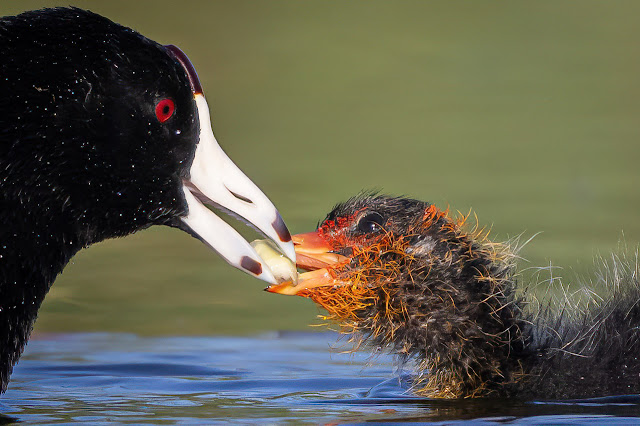
American Coots [photo by Dave Lawrence]
VIEW 2 VIDEOS on MCAS Youtube Channel

Program:      Third Annual Birds of SLO and Northern Santa Barbara (NOSB) Counties

                       Curated and Presented by Judy Neuhauser
                       Music accompaniment by Aria DiSalvio

Description of the Community Program: Judy Neuhauser will present the third annual program of Birds of San Luis Obispo and Northern Santa Barbara Counties. This slide show, featuring photos from some of the best photographers in the area, will showcase the splendor of birds that live and migrate through the spectacularly varied habitats in our counties. The wide range of birds that live in or pass through these landscapes is truly amazing. Join us as we get a close-up look at these birds as they live their lives, in photos taken by some of the Central Coast’s finest nature photographers. The program will be set to music by Aria DiSalvio, a cellist from Santa Cruz, and her musical collaborators.

VIDEO now available for MAR 17th Community Program on Elephant Seals

Piedras Blancas Elephant Seal Rookery [photo by David Johnson]

VIEW VIDEO on MCAS Youtube Channel

TITLE:              The Piedras Blancas Elephant Seal Rookery 

PRESENTER:  Dr. David Johnson, California State Park Elephant Seal Docent  

Description

Join David Johnson, California State Park Elephant Seal Docent, to learn all about the elephant seals at Hearst San Simeon State Park. Discover the fascinating life cycle, adaptations, and natural history of these marine mammals and why they come to local beaches.


Bio: Dr. David Johnson spent 30 years as an owner and physician at Chiropractic Health Care of Rancho Santa Margarita.  His practice served the community of Rancho Santa Margarita and surrounding areas.  The practice was a family practice diagnosing and treating sports injuries, back and neck pain, sciatica and other musculoskeletal disorders.


David has a bachelor of science in Biology, a doctorate of Chiropractic from the Southern California University of Health Sciences and post doctorate education in the treatment of automobile injuries and sports injuries.


He has a love for the ocean that has continued since he was a child growing up in Orange County, CA body surfing and snorkeling.  As an adult he became a certified PADI Open Water Diver and continued his education with Advanced Open Water certification and as a certified Rescue Diver. He and his wife travel all over the world scuba diving. He estimates that he has spent greater than 30 full days underwater!  


David Johnson has volunteered at the Aquarium of the Pacific in Long Beach, CA  as a professional diver for 10 years where he engaged in activities such as hand feeding the animals (yes even a few sharks), keeping the exhibits clean and educating the public by speaking from underwater during the diver shows.  When he retired and moved up to San Luis Obispo in 2022, he found the Friends of the Elephant Seals and decided that would be a great way to spend his volunteer time as an extension of his love for the ocean.

VIDEO now available for FEB 17th Community Program

Tricolored Blackbird [photo by Bill Haas]

See this video and others on the MCAS YouTube Channel.

Title:    The Triennial Tricolored Blackbird Survey, Edition 2025 

Presenter: Presented by Bill Haas, SLO County Coordinator for the Statewide TRBL Survey


Join Zoom Meeting Zoom Meeting ID: 983 7543 0778; Passcode: 091300

You can also find the link in the MCAS Events Calendar on our website header https://www.morrocoastaudubon.org/.


All MCAS Zoom Community Programs are free and open to the public. All ages are welcome. No signup/registration required to attend.


Description:

The Tricolored Blackbird is insect-dependent during the breeding season and largely granivorous when not breeding. Breeding-season insectivory and non-breeding granivory in this colonial species (colonies of which historically numbered in the 100,000s) put severe constraints on a bird species living in anthropogenic landscapes, where both insects and blackbirds are typically considered pests. For example, following the breeding season, most Tricolored Blackbirds move into the Sacramento Valley (although "ours" typically disperse locally), where they feed on ripening rice with other blackbirds (Beedy et. al. 2020). 


Due to their similarity in appearance to Red−winged Blackbirds, which may be legally taken (killed) without a permit under a depredation order (50 CFR 21.43), many Tricolored Blackbirds are shot each fall as they feed on ripening rice. This, in addition to historical conversion of Central Valley marsh to agriculture (and other factors) have caused the Tricolored Blackbird population to drop substantially since the 1930s. Surveys in 1934 estimated >700,000 birds in just eight counties (Neff 1937). In contrast, surveys in 2014 estimated 145,000 birds in 37 counties (Meese 2014).


Since 1994, the statewide survey has been the primary means by which the population of this species is assessed. The goal of the survey is to obtain a statewide estimate of the number of adult Tricolored Blackbirds in California. Tricolored Blackbirds are most accurately and comprehensively counted when at their breeding colonies; they are relatively sedentary at breeding colonies, when most of the population(s) congregate, which allows observers to make multiple, statistically significant estimates of colony size. (References available on request.)


Bill Haas will present a brief history of the survey; an assessment of the current status of the species statewide and locally; a brief description of the survey protocol; an introduction to a program he has initiated with the State, California, Audubon, and several resource conservation districts to create or restore breeding habitat in SLO, Monterey, and Santa Barbara counties.


Bio: Bill’s initial interest in the Tricolored Blackbird dates back to the early 1990s when, having recently returned from a 4-year Peace Corps assignment in Central America, he moved to San Diego. There he met Philip Unitt, the current curator of birds and mammals at the San Diego Natural History Museum. Phil’s interest in San Diego County’s breeding birds was contagious and when Bill asked which county species were of greatest interest to Phil and to the Museum, he responded: “Willow Flycatcher and Tricolored Blackbird.” The result? A 20-year study of the Southwestern Willow Flycatcher along the San Luis Rey River and an annual assessment of “Trikes” wherever he moved, which, after San Diego included Butte, Tehama, Glenn counties and currently, Kern, Monterey, and San Luis Obispo Counties. He is currently the State’s triennial survey coordinator for San Luis Obispo County. The 2025 survey will be Bill’s 8th, and 4th as a county coordinator.

Video now available for DEC 16 MB CBC Compilation and Awards


This community program started with MCAS business, including award announcements for the Libbie Agran Scholarships, Outstanding Service, and Volunteer of the Year. 

Then the engaging Morro Bay CBC Compilation was led by Jay Carroll. The compilation is the culmination of the 71st annual MB Christmas Bird Count, held on Dec 14th. A count of all species was tabulated. The total number of species in count years 2013 - 2023 have ranged from 187 to 204, with anywhere from 98 to 142 participants. What was the count this year?

Watch the video on the MCAS YouTube Channel.

VIDEO now available for NOV 18th Community Program

South Africa's National Birds, Blue Cranes, on a carpet of native wildflowers
in Namaqualand, South Africa (Credit: Nishi Rajakaruna)

 Video available on the MCAS YouTube Channel.

Title:           Becoming a Birder in South Africa


Presenter:  Nishanta Rajakaruna


Description: Nishi Rajakaruna fell in love with birding and wildlife photography during his 2022-2023 visit as a Fulbright US Scholar to South Africa. During his travels, he took photos of 402 bird species in southern Africa and is looking forward to sharing some of his photos and stories.


Bio: Nishi Rajakaruna was born and raised in Sri Lanka. He pursued his undergraduate education in human ecology at College of the Atlantic, Maine, and his MS and Ph.D. in botany at the University of British Columbia, Canada. He conducted postdoctoral research in plant ecology at Stanford University. He has taught at predominantly undergraduate teaching-focused universities for 20 years and is currently a professor in plant biology at California Polytechnic State University where he teaches general botany, ethnobotany, biogeography and geoecology. Nishi is currently a Fulbright US Scholar Alumni Ambassador, promoting opportunities for educational and cultural exchange among faculty and students across the United States.

VIDEO now available for OCT 21st Community Program

People recycle their food waste to create compost [photo courtesy of Laura Albers]
View video on MCAS YouTube Channel

Title: Building Resilience in a Climate Changing World


Presented by Laura Albers, MPA, executive director, SLO Climate Coalition

Description: Climate change is happening, and there is evidence all around us. While the current trajectory of how we will experience our world can be frightening, there are things each of us can do to create climate resiliency in our communities. Hear from Laura Albers, executive director for SLO Climate Coalition, about the resources and actions available here on the Central Coast to help you find ways to create resiliency around you, your life, and your community.


Bio: A California native - originally from Santa Barbara, and having grown up in Oakland - Laura Albers came to San Luis Obispo in 2002 to raise her two children and put down roots. She earned a BA in Elementary Education from Pepperdine University, and a Master in Public Administration for Nonprofit Management from USC.


Among numerous volunteer roles, Laura’s professional experience includes serving in several local nonprofits, including as the executive director for the Central Coast State Parks Association and SLO Chamber’s Leadership San Luis Obispo program, as well as positions with Gala Pride & Diversity Center, San Luis Coastal Unified School District, Los Padres ForestWatch, and the SLO County YMCA. Laura is currently serving as the executive director for SLO Climate Coalition, and volunteers as the board treasurer for R.A.C.E. Matters SLO.

VIDEO now available - SEP 16 - The Language of Birds


Great-tailed Grackle, Phillips County, CO [photo by Nathan Peiplow]

Video available at MCAS YouTube Channel.

Description: All around us, the birds are constantly telling us who they are and what they are doing. In this talk, Nathan Pieplow unlocks the secrets of their language. You’ll listen in on the pillow talk of a pair of Red-winged Blackbirds, and learn the secret signals that Cliff Swallows use when they have found food. You’ll learn how one bird sound can have many meanings, and how one meaning can have many sounds—and how, sometimes, the meaning isn’t in the sounds at all. This talk from the author of the Peterson Field Guide to Bird Sounds is an accessible and entertaining introduction to a fascinating topic.


Bio: Nathan Pieplow is the author of the Peterson Field Guide to Bird Sounds, published in two volumes, one for Eastern and one for Western North America. An avid bird sound recordist and videographer, he is the author of the bird sound blog https://earbirding.com/blog/, a board member of the Bird Conservancy of the Rockies, an author of the Colorado Birding Trail, and former editor of the journal Colorado Birds. He teaches writing and rhetoric at the University of Colorado in Boulder.

VIDEO now available for MAY 20 Community Program - Beavers and Why They Matter

View the video on MCAS YouTube Channel.

Description: If you walk along the Salinas River in California much of it is a dry, sandy wash. Imagine instead seeing large expanses of ponds surrounded by lush willows and cottonwoods, teaming with wildlife and birdsong. This difference leads to answering the question, ‘Why Do Beavers Matter?” In this presentation, Audrey Taub will explain how beavers can help make the Central Coast wetter, more resilient to floods, droughts, and fire, thus creating a more sustainable climate for birds and other wildlife. She will also explain how to get involved in promoting the creation of more wetlands in your area by supporting the beavers.

VIDEO is now Available! - May 14 - eBird Seminar


eBird Panel Video:  

Go to the MCAS YouTube Channel to listen to eBird experts and enthusiasts Brian Sullivan, Morgan Tingley, Sierra Glassman, Ronan Alam, and Tom Edell discuss eBird as a tool for science, conservation, and in birding culture. Moderated by MCAS Program Director Torrey Gage-Tomlinson.

VIDEOS now available - APR 15 - Membership Meeting and Second Annual Birds of SLO and NSB Counties

Great Egret [photo by Alice Cahill]  

There are 2 videos for Birds of SLO and Northern SB Counties: Pt 1 and Pt 2  

Enjoy!  

Description: At Morro Coast Audubon Society’s Annual Members’ Meeting, we will present an all new program that, as in the October 2023 program, will showcase the splendor of birds that live in the varied habitats found in San Luis Obispo and Northern Santa Barbara Counties, from sandy beaches to oak woodlands, savannahs and alkali flats. The wide range of birds that live in or pass through these landscapes is truly amazing. Join us as we get a close-up look at these birds as they live their lives, in photos taken by some of the Central Coast’s finest nature photographers. The program will be set to original music created and recorded by the curator and presenter of the program, Al King.

Bio: Al King has had a lifelong interest in the natural world. He received his BA in Environmental Biology with a special interest in plant ecology from UCSB. He developed an interest in photography at a young age, and has enjoyed photographing plants, animals and landscapes throughout his life. Another passion of Al’s is playing and composing music which you will have the opportunity to hear as an accompaniment to this program.

VIDEO now available - MAR 18 - 15 Years of Birding for Conservation in Colombia


Crimson-rumped Toucanet [photo by Chris Calonje]


Video is now available on the MCAS YouTube Channel

Title:               15 Years of Birding for Conservation in Colombia

Presenter:      Presented by Christopher Calonje 

Description: Christopher Calonje will talk about his 15-year involvement in promoting bird tourism in his native Colombia. The end of a 50-year civil war brought peace and prosperity to a country marred by violence, opening it up to tourism and to birders from around the globe. Colombia boasts the world's longest list of birds, now over 1,960 species, which is roughly 20% of the world’s species in a country that occupies less than 1% of Earth's landmass. Chris will discuss how bird tourism has supported conservation and local communities in rural areas of Colombia, and his involvement in the process since the country finally became accessible to birders at the beginning of the 21st century. 

Bio: A Humboldt State University graduate, Chris has led hundreds of tours in all regions of Colombia since he founded Colombia Birdwatch in 2009. Chris devotes his time to various non-profit conservation groups and local communities in Colombia and also runs the amazing Araucana Lodge in southwestern Colombia, near the city of Cali. Owned by his family on a 30-acre property purchased in 1957 by his grandfather Julio H., the lodge has been touted as one of the best birding lodges in the country.

VIDEO now available - FEB 19 - Tales from the Road to Tuktoyaktuk

VIDEO

Topic:   Bird-tripping: Tales from the Road to Tuktoyaktuk

Presenter:   Devon Bradley, Ph.D.

DescriptionIn the summer of 2022, Devon Bradley packed up her binoculars, camera, and pup to follow the birds north, all the way to the shores of the Arctic Ocean. Devon carved a circuitous route to Alaska, first along the Cassiar Highway of British Columbia, to Yukon on the famed Alaska Highway, and up to the Arctic Circle via the Dempster Highway – a ribbon of a road that traverses two mountain ranges, extensive subarctic wilderness, and the breeding habitats of some incredible species of birds, on its way to the Mackenzie Delta and Tuktoyaktuk!


VIDEO now available - DEC 16 - MB CBC Compilation Program


The Morro Bay Christmas Bird Count Compilation, led by Jay Carroll, was conducted on DEC 16th. This year the event was in person and recorded so those that could not attend can view from the MCAS YouTube Channel.

Enjoy!